AudioToon: Audiobooks & Dramas
MangaToon HK LimitedMusic & Audio
2.819.00 Reviews
- Version
- 3.37.02
- Installs
- 500.00K
- Age Rating
- Teen
Screenshots
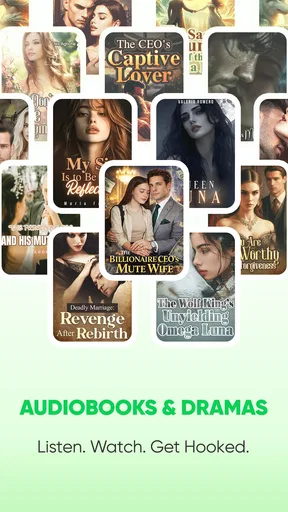
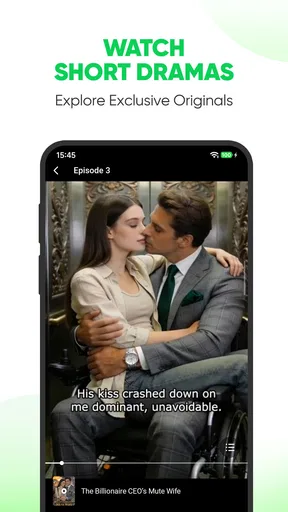
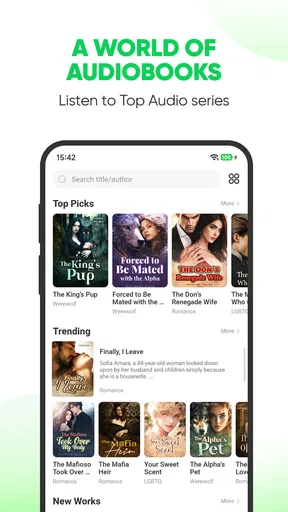
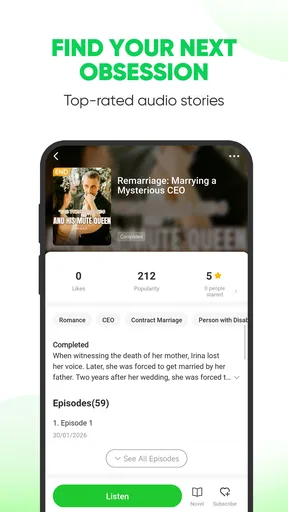
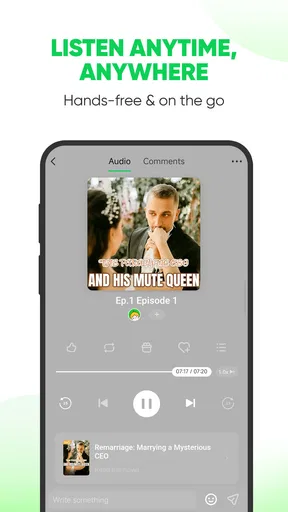
Our Review of AudioToon: Audiobooks & Dramas
 Analysis by Appyee
I approached AudioToon: Audiobooks & Dramas as a listener looking for a practical way to discover story-driven audio, rather than as a general music player. That distinction matters. The app is built around short dramas, audiobooks, and novels, so its strongest use is not managing a personal music library or editing recordings. It is helping me choose a story quickly, start listening, and decide whether I want to continue.
That makes it an interesting option for people who enjoy serialized fiction but do not always have time for a full audiobook. I can use it during a commute, while cooking, or when I want something more engaging than background music. At the same time, anyone expecting professional audio production tools, a podcast editor, or a place to publish personal work should look elsewhere. Its creative value is on the consumption side: it gives me a convenient way to explore performed stories and novels, not a workspace for producing them.
Finding a story when I only have a few minutes
The first useful quality is the low commitment of the format. Short dramas are easier to try than a long audiobook, especially when I am unsure about the narrator, tone, or plot. Instead of deciding whether I can dedicate several hours to one title, I can sample a story and see if the opening holds my attention. That is a better starting point for casual listening than browsing a large audiobook catalog with no clear idea where to begin.
The app comes from MangaToon HK Limited, which helps explain its story-first identity. I found the experience more suited to listeners who like dramatic pacing and episodic entertainment than to people searching for a quiet, academic narration. The combination of audiobooks, novels, and short dramas gives the catalog a mixed feel: some sessions can be quick and theatrical, while others invite a longer commitment.
I would begin by choosing the format that matches the time available. If I have only a short break, a drama is the sensible entry point. If I want a longer listening session, an audiobook or novel is a better fit. This simple choice prevents one of the most common frustrations with story apps: starting something that demands more attention than I can give it.
AudioToon is free to install, so trying that discovery workflow does not require an upfront purchase. Its content rating is Teen, which is a useful signal for families and younger listeners, although I would still check individual stories before handing over a device. A broad age label cannot tell me whether every plot, theme, or dramatic situation will suit a particular listener.
How I use it as a listening workflow
My practical routine is simple. I browse for a premise that sounds interesting, start with the opening portion, and pay attention to whether the narration and pacing work for me. With audio fiction, the subject alone is not enough. A story can look appealing in text but feel flat when performed, while another can become much more enjoyable because the voices and timing create momentum.
This is where the app differs from ordinary music services. A music app is usually built around artists, albums, playlists, and tracks. AudioToon is organized around narrative attention. I am not choosing a song for a three-minute mood change; I am choosing a story that may unfold over multiple listening sessions. That means I judge it by continuity, discoverability, and how easily I can return to the right point.
For an everyday scenario, imagine an evening commute with enough time for one short chapter but not enough for a film. I can use that window to test a drama, then continue another day if the story works. The format is especially useful when I want entertainment that does not require looking at a screen. It gives my eyes a break while still offering a more directed experience than a random playlist.
There is also a useful mental separation between browsing and listening. I would not spend the entire break searching through every available title. Instead, I would shortlist a few possibilities, try one, and stop if the opening does not connect. That approach makes the app feel less like an endless catalog and more like a small queue of experiments.
Where the making process begins—and where it stops
The editorial angle needs a clear boundary here: this is not a tool for making, editing, publishing, or managing my own creative output from a brief to delivery. I cannot treat it like an audio workstation, script editor, or publishing dashboard. Its role is to present finished or packaged stories for listening. For a creator, that makes it useful as a reference library, not as the place where the project is built.
That reference use is more valuable than it may sound. Listening to short dramas can help me study how quickly a scene establishes conflict, how dialogue carries exposition, and how a cliffhanger encourages another session. Audiobooks offer a different lesson in sustained narration and pacing. If I am writing fiction or planning an audio project, I can listen analytically rather than passively.
I would take notes outside the app on moments that work: an opening that introduces a character efficiently, a transition that avoids confusion, or a scene that creates tension without visual support. The important trade-off is that AudioToon supplies examples but does not turn those observations into editable assets. I still need separate tools for drafting, recording, sound design, file management, and delivery.
That limitation should prevent a common misunderstanding. A store summary about watching and listening to stories may sound like a broad entertainment platform, but it does not make the app a creator suite. If my goal is to record narration, trim takes, add music, or send a finished episode to an audience, I would choose a dedicated audio editor and publishing service instead.
Iteration: deciding what deserves another session
With serialized fiction, iteration happens in my listening choices rather than inside an editing timeline. I test a title, reconsider it, and either continue or move on. That sounds basic, but it is an important part of using a catalog efficiently. Not every story deserves a long trial, and the short-drama format makes it easier to make that decision without wasting an entire afternoon.
My advice is to judge three things early: whether the premise is clear, whether the voices are easy to distinguish, and whether the pacing matches the mood I want. If one of those fails, I would not force myself to continue simply because I have already started. The app works best when I treat discovery as a process of quick, low-risk choices.
For longer audiobooks and novels, I would use a different test. I would give the narration enough time to establish its rhythm, then decide whether the story is suitable for repeated listening. A title that works during focused listening may not work as background audio, and the reverse can also be true. This distinction is especially useful for chores, travel, and bedtime, where my attention changes from minute to minute.
The app’s average rating is 2.8 from around 1.8 thousand ratings, so I would approach it with realistic expectations rather than assuming the experience will suit everyone. That figure does not tell me which stories people disliked or whether their concerns involved the catalog, playback, or purchases, but it does suggest that I should test the app personally before committing to a long listening routine.
There is another practical consideration: the presence of in-app purchases ranging from $0.99 to $99.99 per item. Since the app is free to install, I would establish a personal spending limit before exploring paid content. I would also avoid buying a longer story merely because its opening is interesting. Trying several free options first is the safer workflow, particularly when I am still learning which genres and formats work for me.
Returning to a story and managing attention
Story apps live or die by how easy they are to resume. In my experience, I want to know immediately what I was listening to, where I stopped, and whether I still remember the characters. AudioToon makes most sense when I keep my active choices limited instead of opening many titles at once. A small listening queue reduces the chance of forgetting why I started a story.
I would also separate titles by purpose in my own routine. One story can be reserved for commuting, another for household tasks, and a third for focused listening. This is not a special production feature; it is a simple habit that makes a mixed catalog easier to manage. It also helps me notice whether a title succeeds because of its writing or merely because it fits a particular moment.
For creators using the app as research, I would keep a separate note with the title, scene, and lesson learned. That prevents the app from becoming a vague source of inspiration. A concrete note such as “the conflict arrives before the backstory” is more useful than simply remembering that a drama felt exciting. The app can provide the listening material, while an external writing tool turns observation into a usable creative decision.
On the technical side, the current version is 3.37.02 and it supports devices running Android 6.0 or later. That makes the compatibility range fairly approachable for Android users with older phones, though the actual comfort of listening will still depend on the device, headphones, and connection conditions. I would check the app on the phone I plan to use most rather than assuming that an older supported operating system guarantees an identical experience.
Handoff, sharing, and the limits for creators
If I think in terms of a creative project’s handoff, AudioToon is the receiving end rather than the delivery pipeline. I can use it to consume completed stories, study presentation choices, and decide what kind of audio fiction I enjoy. I should not expect it to export my own edited episode, package a manuscript, or deliver a finished production to clients or listeners.
That makes the app a poor fit for a novelist who needs document management or an audio producer who needs multitrack control. A dedicated audiobook player may also be better for someone who already owns a carefully organized personal library and wants advanced playback management. Likewise, a music service is the more natural choice when my priority is songs, albums, artist discovery, or playlists.
AudioToon becomes more compelling when the handoff I want is simply “give me a story I can start now.” Its free entry point lowers the barrier to experimentation, while the mix of short dramas, audiobooks, and novels gives me more than one listening length. The compromise is that the catalog experience may require patience: I need to browse, sample, and make my own judgments instead of expecting every title to fit my taste.
I would also be careful with purchases at the moment of enthusiasm. A dramatic opening can make an item feel essential, but a paid story is a commitment to the whole listening experience. My preferred handoff process is to test the narration, confirm that the format suits my routine, and only then consider spending. That is particularly important because individual in-app items can reach $99.99.
Who should use it and who should skip it
I would recommend the app to listeners who enjoy fiction in audio form and want short dramas alongside longer narration. It is a good match for someone who regularly has small pockets of time and wants a story that can fill them without requiring a screen. It can also help aspiring writers and audio creators study pacing, dialogue, and serialized structure through repeated listening.
I would be more cautious recommending it to people who want a polished general-purpose audio library. If my main interests are music, podcasts, local files, or professional audiobook organization, another category of app will probably serve me better. The same applies to anyone looking for creator tools. AudioToon does not replace recording software, editing software, a manuscript manager, or a publishing platform.
Parents should remember the Teen rating and make choices with the individual listener in mind. A teenager may enjoy the dramatic format, while a younger child may need a more carefully filtered selection. Adults who dislike cliffhangers or episodic storytelling may also find the short-drama approach less satisfying than a complete standalone audiobook.
My creator-focused verdict
After looking at it as both a listener and a creative reference tool, I see AudioToon as a focused story-discovery app rather than a production environment. Its best idea is the combination of short dramas, audiobooks, and novels, which lets me match a story to the time and attention I have. That flexibility is genuinely useful in daily life, especially when I want something more absorbing than music but less demanding than a full visual show.
The weaknesses are just as clear. The rating of 2.8 means I would not install it blindly and assume a perfect experience. The in-app purchase range means I would browse carefully and set a budget. And the app should not be chosen by anyone who needs to create, edit, export, or publish audio. Those are not minor omissions; they define what the product is and is not.
My final recommendation is conditional but positive: try it if your goal is discovering narrated fiction in short, manageable sessions. Start with free listening, test several formats, and use a separate note-taking or production tool if you are studying the stories for your own creative work. If you need a dependable music player, an advanced audiobook manager, or a complete creator workflow, choose a specialist alternative. For casual story listening and inspiration, however, AudioToon has a clear place in my routine.
Verdict
Strengths of AudioToon: Audiobooks & Dramas
- Large selection of audiobooks, dramas, and serialized audio stories
- Dramatic voice acting makes many productions more immersive
- Useful for relaxing, commuting, or enjoying stories without reading
- New episodes and titles can provide regular reasons to return
- Streaming lets you start listening without storing every title locally
Limitations of AudioToon: Audiobooks & Dramas
- Some content may require a subscription or separate in-app purchases
- Audio quality and narration can vary noticeably between productions
- Offline listening may be limited to selected titles or premium users
- The catalog may focus heavily on specific genres and regional content
- Background playback and downloads can consume considerable battery and data
Similar Picks in This Category
View All
YouTube Music
Google LLC4.4

Samsung Music
Samsung Electronics Co., Ltd.3.8

Spotify: Music and Podcasts
Spotify AB4.3

JioSaavn - Music & Podcasts
Saavn Media Limited4.3

Lark Player:Music Player & MP3
Lark Player Studio - Music, MP3 & Video Player4.6

StarMaker: Sing Karaoke Songs
SKYWORK AI PTE. LTD.4.3
Frequently Asked Questions
What is AudioToon: Audiobooks & Dramas?
AudioToon: Audiobooks & Dramas is an audio-focused entertainment app designed for listening to audiobooks, serialized dramas, and other narrated stories. Its catalog may include fiction, romance, fantasy, mystery, and dramatic productions, depending on your region. The app is intended for users who prefer listening while commuting, relaxing, exercising, or doing other activities instead of reading on screen.
Is AudioToon: Audiobooks & Dramas free to use?
AudioToon can generally be downloaded without an upfront charge, but access to all content may depend on the app’s payment model. Some stories or episodes may be available for free, while premium chapters, subscriptions, credits, or in-app purchases can be required for the complete experience. Before downloading, check the current store listing and review the subscription terms, renewal conditions, and refund policy.
Does AudioToon work offline?
Offline listening may be available for selected audiobooks or drama episodes after they have been downloaded inside the app, although availability can vary by title, account type, and platform version. You normally need an internet connection to browse the catalog, stream content, or synchronize progress. It is worth downloading episodes over Wi-Fi before traveling and checking that they remain accessible without mobile data.
What kind of content and languages are available in AudioToon?
AudioToon’s selection is centered on spoken entertainment, including audiobooks, audio dramas, episodic fiction, and narrated series. The exact genres, titles, languages, and availability can change over time and may differ between countries. Users looking for a particular language or category should search the catalog before subscribing, because not every title is necessarily offered with translations, subtitles, or professional voice acting.
Is AudioToon suitable for children and does it require an account?
AudioToon may contain mature themes, romance, suspense, violence, or language, so parents should check the age rating and individual title descriptions before allowing children to use it. An account may be needed to save favorites, synchronize listening progress, access purchases, or use premium features. Review the app’s privacy information and permissions as well, especially if you are concerned about data collection or personalized recommendations.
